Sprockets for Assembly Line Conveyors — Precision Power Transmission for Manufacturing
Assembly line conveyor sprockets are the core drive components that translate motor torque into precise, synchronised linear motion along production lines. In automotive, electronics, consumer goods, and general manufacturing plants across Australia, these sprockets engage roller chain to move work-in-progress between stations at controlled speeds and indexed positions. We supply conveyor drive sprockets in ANSI #35 through #80 and ISO 06B through 16B — the most commonly specified range for assembly line applications — with induction-hardened teeth, precision bores, and full material traceability.

Technical Specifications
| Parameter | Typical Range | Customisable |
|---|---|---|
| Pitch | 9.525mm – 25.4mm (3/8″ – 1″) | Yes |
| Chain Standard | ANSI #35, #40, #50, #60, #80 / ISO 06B–16B | Yes |
| Tooth Count | 15 – 60T (most common 17–25T) | 9–120T |
| Strand Configuration | Simplex / Duplex | Triplex |
| Material | C45 (1045) Carbon Steel | SS304, SS316, Nylon |
| Tooth Hardness | HRC 40–50 (induction hardened) | Through-hardened |
| Surface Treatment | Black Oxide | Zinc, Zinc-Nickel, Phosphate |
| Bore Type | Finished bore with keyway | Pilot bore, TL, QD |
| Bore Tolerance | H7 | — |
| Concentricity (TIR) | ≤ 0.025mm | — |
| Keyway Standard | DIN 6885 / AS 1403 | ANSI, JIS |
| Hub Type | B-Hub (one-sided) | A-Plate, C-Hub, TL, QD |
| Max Operating Speed | Up to 1,200 RPM | By application |
| Operating Temperature | -20°C to +120°C | SS for higher |
| Tooth Profile | AGMA quality class | — |
| Weight Range | 0.1 – 8 kg (by size) | — |
| Pitch Diameter (17T #40) | 69.1 mm | — |
| Outside Diameter (17T #40) | 77.9 mm | — |
| Max Bore (17T #40) | 25 mm | TL extends range |
| Certification | ISO 9001:2015 | EN 10204 Type 3.1 |
Performance Advantages vs Inferior Sprockets
CNC Precision vs Cast-and-Grind
Our teeth are CNC hobbed to AGMA quality class. Inferior sprockets are often cast with minimal finishing, leading to inconsistent tooth profiles that accelerate chain wear by up to 40% and cause vibration on high-speed assembly lines.
HRC 40-50 Teeth
Induction hardened with controlled depth. Cheap sprockets often skip hardening entirely, resulting in rapid tooth deformation under continuous load.
0.025mm TIR Bore
Precision bore concentricity eliminates vibration. Low-quality sprockets with loose bore tolerances cause shaft wear and premature bearing failure.
Material Traceability
EN 10204 Type 3.1 material certificates. Cheap imports often have no traceability, making quality audits impossible.
Consistent Batch Quality
ISO 9001:2015 process control. Every sprocket is dimensionally inspected. Inferior suppliers deliver varying quality between batches.
How Sprockets Work in Assembly Line Conveyors
In an assembly line conveyor, the drive sprocket is mounted on the head shaft (motor-driven end) and the driven/idler sprocket is on the tail shaft. A continuous loop of roller chain wraps around both sprockets. When the motor turns the head shaft, the drive sprocket’s teeth engage the chain links, pulling the chain and the conveyor belt or slat attached to it in a linear path.
The sprocket’s tooth count determines the speed ratio: a smaller drive sprocket (fewer teeth) produces higher chain speed but lower torque, while a larger sprocket (more teeth) reduces speed but increases pulling force. For indexing conveyors, precise tooth profiles are critical — any inconsistency causes positional errors at assembly stations.
Where they sit: Head shaft (drive), tail shaft (driven/take-up), and along the return path (idler sprockets for tension).
What they do: Convert rotational motor power into precise linear conveyor motion. Control speed, synchronise station timing, maintain chain tension.

Compatibility Information
| Compatible With | Details |
|---|---|
| Chains | ANSI #35, #40, #50, #60, #80 / ISO 06B, 08B, 10B, 12B, 16B roller chains |
| Conveyor OEMs | Dimensionally interchangeable with sprockets used on Dorner*, Hytrol*, FlexLink*, Bosch Rexroth* conveyor systems |
| Gearboxes | Compatible shaft sizes from standard worm, helical, and bevel gearbox output shafts |
| VFDs | Suitable for variable frequency drive speed control applications |
*Brand names are mentioned solely for compatibility reference and do not imply endorsement or affiliation.
Quick Selection Guide for Assembly Line Sprockets
| Step | Question | Action |
|---|---|---|
| 1 | What chain is currently installed? | Match sprocket pitch to chain pitch exactly (ANSI or ISO) |
| 2 | What is your shaft diameter? | Select bore size. Choose TL/QD if frequent changes needed |
| 3 | What speed ratio do you need? | Drive teeth ÷ Driven teeth = Ratio. Min 17T drive recommended |
| 4 | Single or multi-strand? | Simplex for most lines. Duplex if load exceeds simplex rating |
| 5 | Environment? | C45 steel indoors. SS304 for washdown. Zinc for outdoor |
| 6 | Need indexing precision? | Specify AGMA quality class. TL bushing for best concentricity |
Assembly Line Conveyor Sprocket Installation
1. Safety: Lock out/tag out (LOTO) the conveyor drive motor. Verify zero energy state.
2. Remove old sprocket: Loosen set screws or TL bolts. Slide sprocket off shaft. Inspect shaft and keyway for wear.
3. Verify new sprocket: Confirm pitch, tooth count, bore, and keyway match the application requirements.
4. Mount sprocket: Slide onto shaft, insert key, tighten set screws to specification (or torque TL bolts in star pattern).
5. Align: Use a straightedge or laser alignment tool across drive and driven sprocket faces. Both must be within 0.5mm per 300mm of centre distance.
6. Chain tension: Set 2–3% sag on the slack side. For vertical or inclined conveyors, use gravity or spring tensioners.
7. Lubricate: Apply ISO VG 30–50 oil to chain at the sprocket engagement point.
8. Test: Run conveyor at low speed for 30 minutes. Recheck alignment and tension. Listen for abnormal noise.
Troubleshooting Sprocket Issues on Assembly Conveyors
| Symptom | Likely Cause | Solution |
|---|---|---|
| Chain rides up on teeth | Worn sprocket teeth (hook shape) | Replace sprocket. Replace chain if elongated >3% |
| Excessive vibration | Misalignment or loose bore | Re-align sprockets. Check bore and keyway fit. Tighten fasteners |
| Uneven tooth wear | Misalignment between drive and driven | Realign using laser tool. Check frame for twist |
| Chain skipping teeth | Chain elongation >3% or severely worn sprocket | Replace both chain and sprockets simultaneously |
| Excessive noise | Insufficient lubrication or chain too tight | Lubricate with ISO VG 30–50. Adjust sag to 2–3% |
Case Studies — Engineer’s Field Notes
Melbourne, VIC — Automotive Parts Assembly
“Replaced OEM #40 sprockets on three assembly lines with Ever-Power equivalents. Bore concentricity was measurably better — vibration dropped at the sensor. Running 14 months, zero unscheduled stops related to chain drive.”
★★★★★ — Senior Maintenance Engineer
Adelaide, SA — Electronics Assembly
“We use #35 sprockets on our PCB insertion line. The indexing accuracy is critical — components must position within ±0.3mm. Ever-Power sprockets are performing to specification. Material certs were provided for our ISO audit.”
★★★★★ — Process Engineer
Sydney, NSW — Consumer Goods Packaging Line
“TL bushed #50 sprockets across our packaging conveyor. Sprocket changes during product changeovers now take 10 minutes instead of an hour. The self-centring taper fit eliminated the alignment drift we had with set-screw sprockets.”
★★★★☆ — Packaging Line Supervisor
Brisbane, QLD — White Goods Manufacturing
“Standardised on Ever-Power 08B sprockets for all our assembly conveyors. Consistent quality, competitive pricing, and material documentation included with every order. Our incoming inspection pass rate is 100% across 12 deliveries.”
★★★★★ — Plant Manager
Perth, WA — Mining Equipment Sub-Assembly
“Duplex #60 sprockets on our heavy component assembly line. The induction-hardened teeth are holding up well under the higher chain tensions we run. Bore and keyway were accurate — fitted straight onto the shaft.”
★★★★★ — Reliability Engineer
Frequently Asked Questions
What sprocket size is most common for assembly line conveyors?
How often should assembly line sprockets be replaced?
Can I replace one sprocket or must I replace both?
Do you provide sprockets for specific conveyor brands?
What is your minimum order quantity?
Related Products — Transmission Chains
We also manufacture the transmission chains that pair with our sprockets for complete conveyor drive solutions:
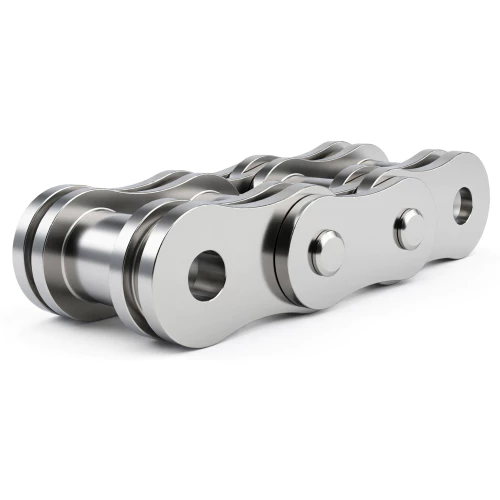
ANSI & ISO Roller Chains
#35 through #80 / 06B through 16B. Simplex, duplex, triplex. Matching chain and sprocket sets available.
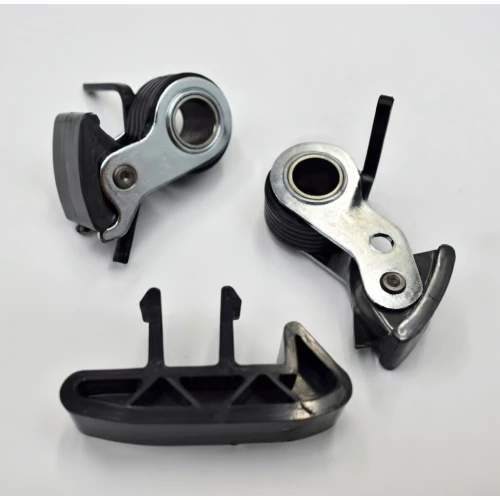
Chain Tensioners
Automatic and manual tensioners for maintaining optimal chain slack on assembly conveyors.
Certifications and Standards Compliance
✅ ISO 9001:2015 certified manufacturing facility
✅ ANSI B29.1 and ISO/R 606 dimensional compliance
✅ EN 10204 Type 3.1 material test certificates available
✅ Dimensional inspection reports provided on request
✅ Quality commitment: 100% dimensional inspection before dispatch
About Ever-Power Australia
We are a full-range power transmission manufacturer with over 15 years of export experience serving the Australian manufacturing and industrial sectors. We operate from an ISO 9001:2015 certified facility equipped with CNC hobbing machines, CNC lathes, induction hardening lines, and comprehensive dimensional inspection systems.
We maintain an inventory of 3,200+ sprocket SKUs and offer OEM manufacturing capability including custom bore machining, surface treatment, special tooth counts, and packaging to customer specifications. We provide engineering support, CAD files (STEP, DWG, PDF), and material traceability documentation with every order.
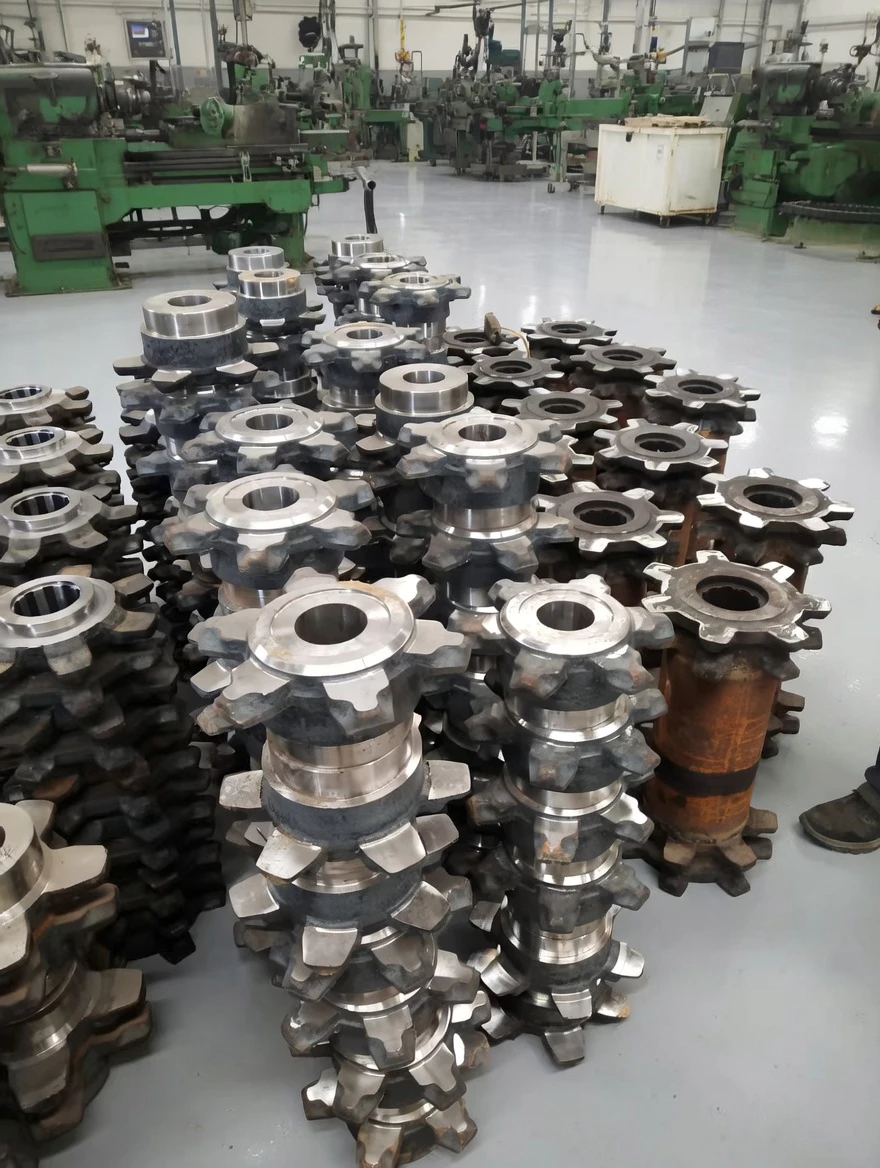
Request Assembly Line Conveyor Sprocket Quotation
We manufacture precision sprockets for assembly line conveyors across Australia. Share your chain size, tooth count, bore diameter, and quantity for engineering review and competitive pricing. We also supply matched chain-and-sprocket sets for complete drive solutions.
Ever-Power Australia Driven Sprockets Co., Ltd. | Home | About Us | Contact