Precision Driven Sprockets for Australian Industry
Ever-Power Australia engineers and supplies high-load driven sprockets for mining, agriculture, food processing, and heavy manufacturing. ANSI and ISO metric standards. Over 15 years of power transmission expertise serving the Asia-Pacific region.
Driven Sprocket Quick Selection Reference
Common specifications across our standard inventory. All sprockets manufactured to ANSI B29.1 or ISO 606 (BS/DIN) tolerances.
| Chain Standard | Common Sizes | Tooth Range | Strand Options | Materials |
|---|---|---|---|---|
| ANSI Roller Chain | #25, #35, #40, #50, #60, #80, #100, #120, #140, #160, #200 | 9T - 120T | Simplex, Duplex, Triplex | Carbon Steel, SS304, SS316, Cast Iron |
| ISO Metric (BS) | 04B, 05B, 06B, 08B, 10B, 12B, 16B, 20B, 24B, 28B, 32B | 9T - 114T | Simplex, Duplex, Triplex | Carbon Steel, SS304, Nylon, Cast Iron |
| Double Pitch | C2040, C2050, C2060, C2060H, C2080, C2080H | 9T - 60T | Simplex, Duplex | Carbon Steel, SS304 |
| Specialty / Custom | Taper-lock, QD bushed, split, idler, weld-on hub | Per specification | Up to 10-strand | Hardened Steel, 4140, 8620, Bronze |
What Ever-Power Australia Delivers
As a full-range power transmission manufacturer producing gearboxes, motors, and a wide variety of mechanical components, our deep expertise in driven sprockets is backed by complete system-level engineering knowledge. We understand how every element in your drive train works together.
Standard Driven Sprockets
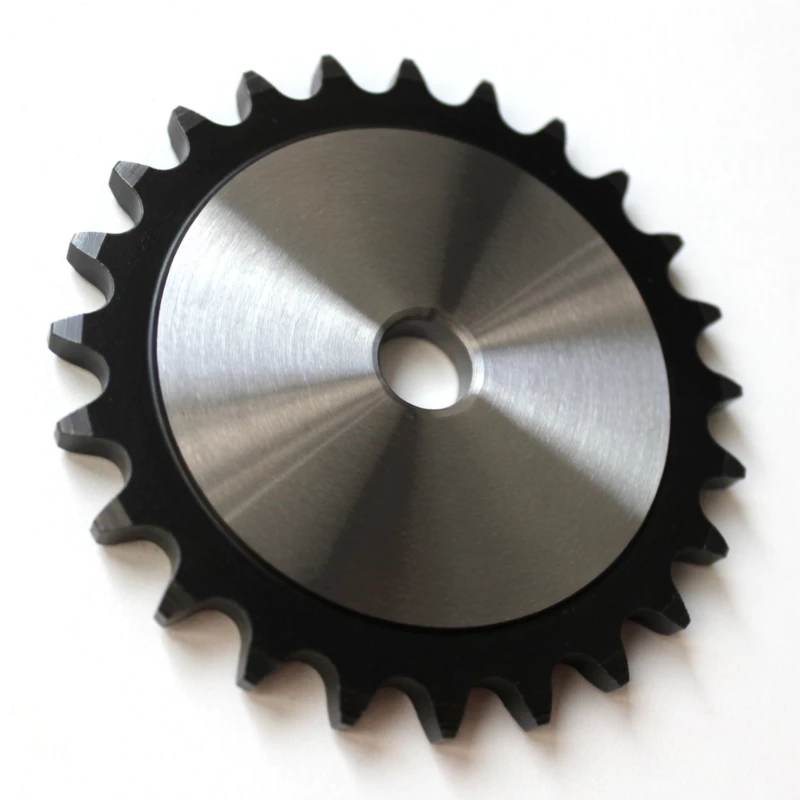
Full catalogue of ANSI and ISO metric driven sprockets in A-plate, B-hub, and C-hub configurations. Tooth counts from 9 to 120 teeth. Available in simplex, duplex, and triplex strand layouts. All teeth are induction hardened to HRC 40-50 for extended operational life in abrasive Australian mining and agricultural conditions. Stock bore sprockets are available for fast dispatch from our warehouse network. Finished bore sprockets with keyway machined to your shaft specifications are also available on short lead times. Each driven sprocket undergoes dimensional inspection against ANSI B29.1 or ISO 606 tolerances before packaging.
Custom & Engineered Sprockets
Non-standard tooth profiles, oversized bore dimensions, weld-on hubs, split sprockets for field replacement without chain removal, and segmental rim sprockets for elevator and bucket applications. We produce custom driven sprockets from 4140 alloy steel, 8620 carburising steel, 304/316 stainless steel, and engineering plastics such as nylon and POM for food-grade and clean-room conveyor systems. Drawings reviewed promptly upon receipt; prototypes delivered on competitive lead times. Flame and induction hardening, black oxide coating, zinc plating, and electro-polishing are all available as surface treatment options for corrosion protection in coastal and high-humidity Australian environments.
Taper-Lock & QD Bushed Sprockets
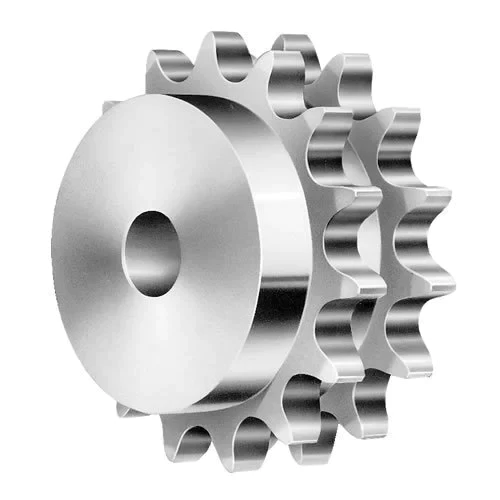
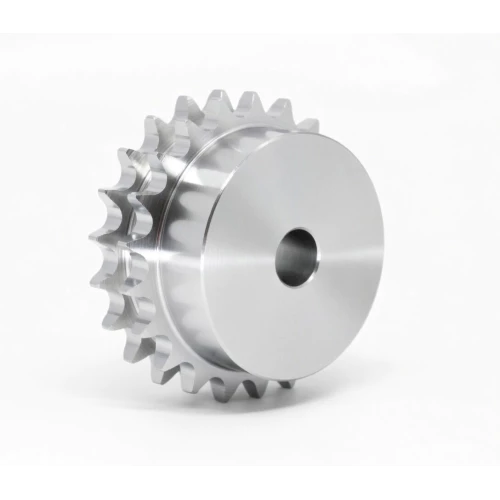
Taper-lock and QD (quick-disconnect) bushed driven sprockets provide rapid installation and removal without disturbing shaft alignment. This is critical for mining and materials handling operations in Western Australia and Queensland where unscheduled downtime costs exceed AUD 10,000 per hour. Our taper-lock driven sprockets cover ANSI #40 through #240 and metric 08B through 32B series. QD bushings are stocked in all standard bores up to 150 mm. Replacement rims are available independently, so operators can carry spare rims on-site without the expense of complete sprocket assemblies. Hardened teeth and precision-machined hub faces ensure concentricity and balance at operating speeds up to 1800 RPM.
Driven Sprocket Product Categories
Organised by chain standard and application to simplify procurement. Every category includes technical datasheets and CAD drawings on request.
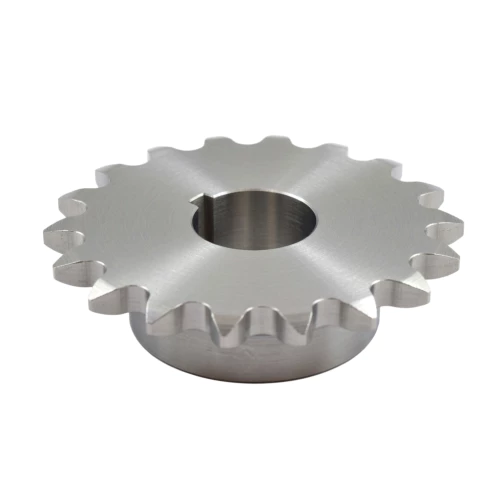
ANSI Standard Sprockets
#25 through #240. A-plate, B-hub, C-hub. Simplex, duplex, triplex. Carbon steel and stainless steel.
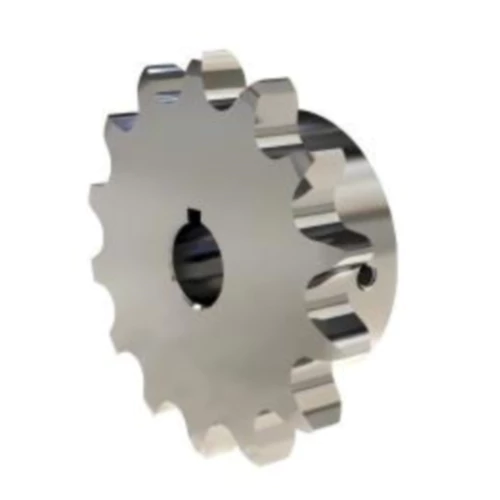
ISO Metric (BS) Sprockets
04B to 32B series conforming to ISO 606 / DIN 8187. Popular with European-origin machinery across Australia.
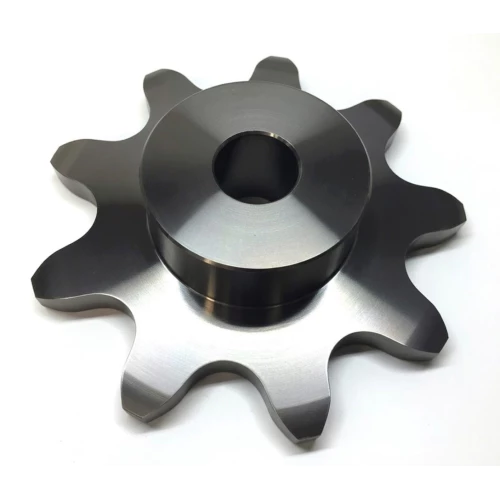
Double Pitch Sprockets
C2040 through C2082H for conveyor applications requiring longer pitch chains.
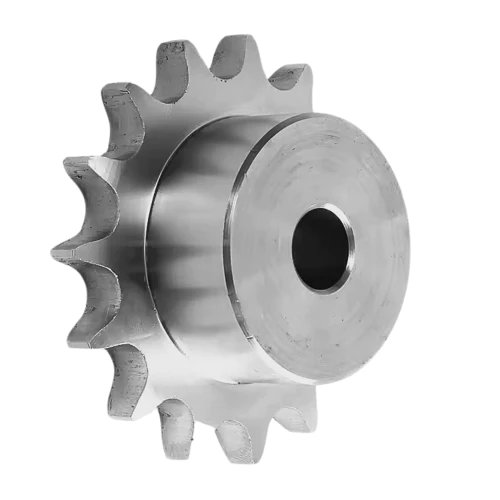
Stainless Steel Sprockets
SS304 and SS316 grade for food, beverage, pharmaceutical, and marine applications.
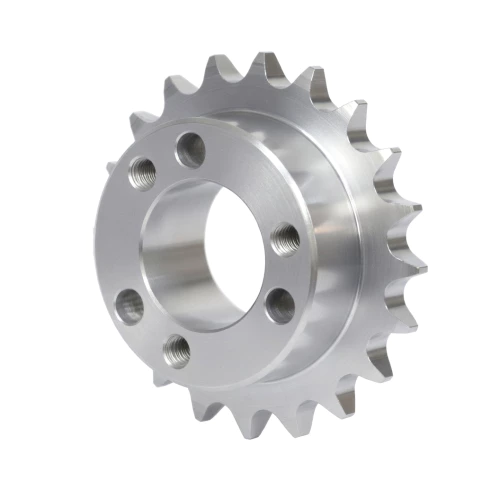
Taper-Lock & QD Sprockets
Bushed driven sprockets for rapid field replacement without chain disassembly.
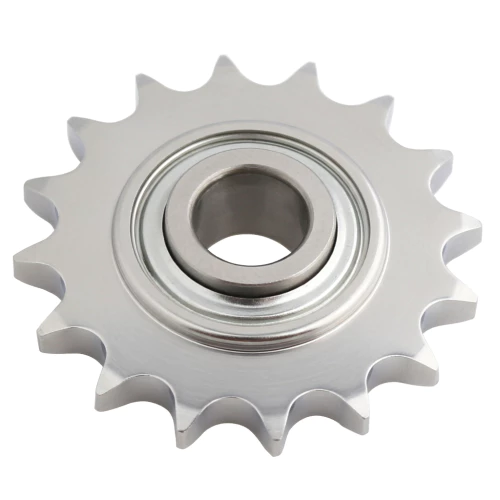
Idler & Specialty Sprockets
Ball-bearing idler, drum, segmental rim, coupling, and pintle chain sprockets.
Why Australian Engineers Specify Ever-Power Driven Sprockets
We reduce procurement risk through verified manufacturing processes, dimensional traceability, and responsive technical support based in the AEST time zone.
Material Certification & Traceability
Every driven sprocket ships with a material test certificate traceable to the steel mill heat number. We supply 1045 carbon steel as standard, with 4140 and 8620 alloy steel available for high-fatigue applications. Stainless steel sprockets include 304 or 316 grade certification. This documentation satisfies audit requirements for Australian mining companies operating under AS/NZS ISO 9001 quality management systems and RPEQ-supervised projects in Queensland.
Precision Manufacturing Process
Tooth profiles are CNC hobbed to AGMA quality class tolerances, ensuring consistent chain engagement across the full tooth count. Bores are machined on CNC lathes with concentricity held to within 0.025 mm TIR relative to the pitch circle diameter. Keyways are broached to AS 1403 / DIN 6885 fit tolerances. Induction hardening of tooth flanks to HRC 40-50 extends wear life by 2-3 times compared to through-hardened or as-machined driven sprockets, particularly in abrasive dust environments encountered in Pilbara iron ore and Hunter Valley coal operations.
Inventory Depth & Logistics
Over 3,200 SKUs of driven sprockets maintained in our Australian-accessible warehouse network. Standard bore sprockets in ANSI #35 through #160 and metric 06B through 24B are stocked for rapid dispatch. Finished bore and keyed sprockets are available on short lead times. Air freight options for emergency breakdown situations at mine sites and remote processing facilities. We maintain safety stock buffers on the top 500 highest-turnover driven sprocket lines to minimise lead time risk for scheduled maintenance programs in mining, sugar milling, and grain handling.
Engineering & Selection Support
Our engineers assist with driven sprocket selection including tooth count optimisation, speed ratio calculation, chain wrap angle verification, and centre distance planning. We review your shaft diameter, torque requirement, operating speed, and environmental conditions to recommend the correct material grade, surface treatment, and strand configuration. CAD files provided in STEP, DWG, and PDF formats. Technical support available via [email protected] during AEST business hours.
Driven Sprocket Applications Across Australian Industries
Real operational scenarios. Each application demands specific sprocket materials, tooth profiles, and surface treatments.
Mining & Mineral Processing
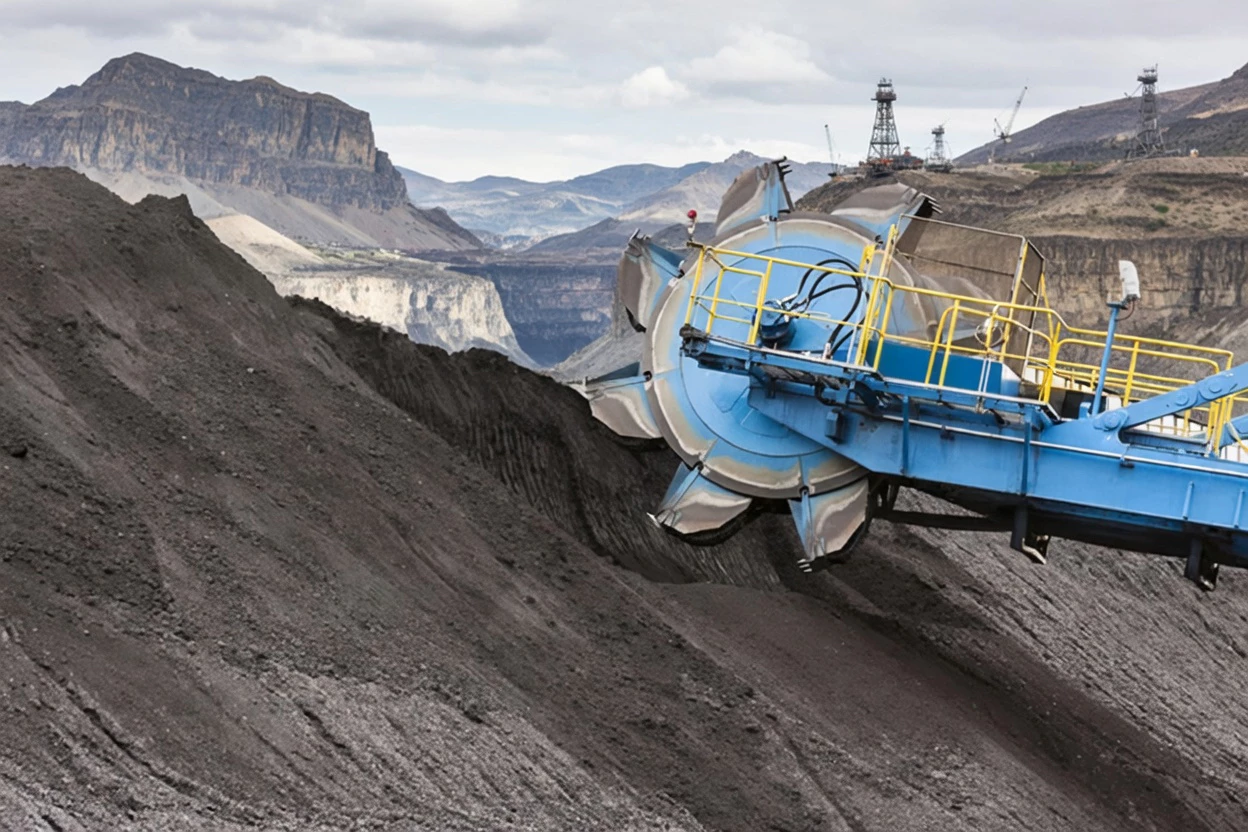
Underground longwall conveyors, overland conveyor belts, bucket elevators, dragline systems, and crusher feed mechanisms all rely on high-tensile driven sprockets to transmit power reliably under continuous loading. In Western Australian iron ore operations, driven sprockets on primary conveyor drives are subjected to ambient temperatures exceeding 45 degrees Celsius, fine particulate abrasion from iron oxide dust, and shock loads from irregular ore feed. We specify 4140 alloy steel driven sprockets with induction-hardened teeth and black oxide surface coating for these conditions. Duplex and triplex chain configurations are standard for conveyor drives exceeding 150 kW.
For coal handling plants in the Hunter Valley and Bowen Basin, we supply corrosion-resistant driven sprockets with zinc plating or hot-dip galvanising to protect against acid mine drainage and washdown water. Idler sprockets with sealed ball bearings are specified on long-span conveyor return runs to maintain chain tension and prevent chain whip under variable loading.
Agriculture & Grain Handling
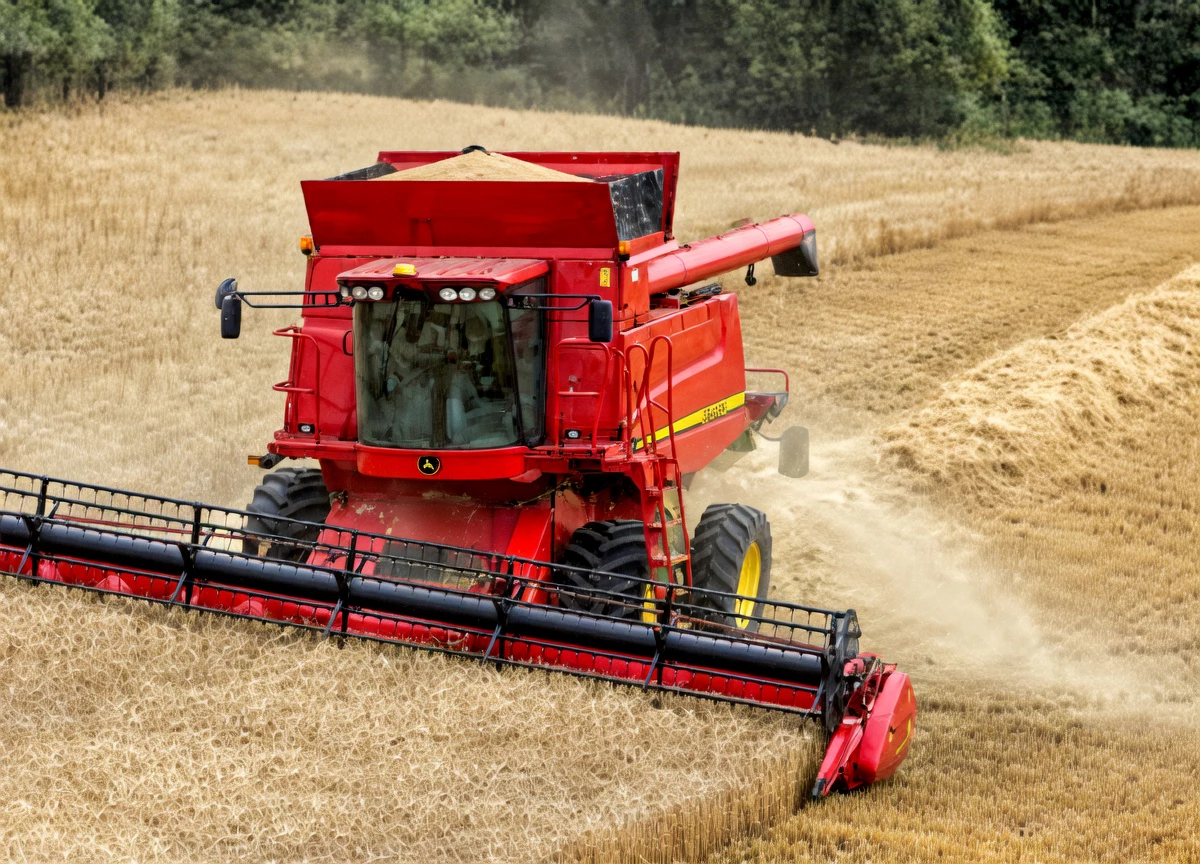
Australian broadacre farming relies on driven sprockets in combine harvesters, grain auger drives, header chain drives, and bulk grain elevator legs. We supply ANSI #50 and #60 driven sprockets with hardened teeth as standard for header and feeder house drives. For grain elevator bucket chains, double pitch driven sprockets in C2060H and C2080H sizes provide the longer pitch necessary for efficient vertical material transport.
Sugar cane milling operations in Queensland use heavy-gauge driven sprockets on cane carrier chains and bagasse conveyors. These sprockets must withstand the corrosive effects of cane juice and the abrasion of fibrous material. We specify stainless steel or hard-chromed driven sprockets for cane milling chains, with segmental rim construction for carrier drives where sprocket replacement must be completed within tight scheduled shutdown windows.
Food & Beverage Processing
Food-grade driven sprockets must comply with hygienic design principles: smooth surfaces without crevices that harbour bacteria, resistance to high-pressure washdown cleaning with caustic and acid solutions, and materials approved for incidental food contact. Our SS304 and SS316 stainless steel driven sprockets are electro-polished to Ra 0.8 micrometres or finer. For dairy processing conveyors, bottling lines, and meat packing accumulation systems, we supply simplex and duplex driven sprockets in ISO metric 08B through 16B sizes with FDA-compliant materials certification.
For applications requiring self-lubrication in areas where oil or grease cannot be tolerated, we offer driven sprockets manufactured from engineering-grade nylon (PA6) and acetal copolymer (POM). These plastic driven sprockets produce minimal noise, resist chemical cleaning agents, and eliminate the risk of lubricant contamination in food-contact zones.

General Manufacturing & Materials Handling
Automated production lines, packaging machinery, palletising systems, and warehouse distribution conveyors use driven sprockets as the primary torque transfer element in their chain drive trains. Precise speed ratios between the drive and driven sprockets control product spacing, accumulation, and indexing. We supply driven sprockets with tight pitch diameter tolerances for applications where position accuracy is critical, such as robotic pick-and-place stations and automated guided vehicle (AGV) chain transfer decks. Multiple-strand driven sprockets (up to 10 strands) are available for high-power distribution conveyor drives.
Automotive parts manufacturing plants use precision-ground driven sprockets on timing chain drives within CNC transfer machines. These sprockets require AGMA quality class 10 or better tooth profile accuracy to maintain synchronous operation between multiple machine stations.
Water Treatment & Wastewater Infrastructure
Municipal water treatment plants and desalination facilities along the Australian coastline employ chain-driven bar screen rakes, clarifier sludge collectors, and filter press feed mechanisms. These systems operate in continuously wet, chlorinated, and sometimes saline environments that aggressively corrode carbon steel. We supply 316-grade stainless steel driven sprockets for primary and secondary clarifier collector chains, with electro-polished finish for reduced biofouling. For bar screen rake drives operating in raw sewage contact, we specify duplex driven sprockets with sealed bearing idlers to maintain positive chain engagement under variable debris loading. Our driven sprockets for water treatment applications are dimensionally interchangeable with OEM specifications from major clarifier and screen manufacturers.
Timber, Pulp & Paper
Sawmill log decks, debarker infeed conveyors, chip conveyors, and paper machine felt drive systems utilise heavy-duty driven sprockets under high-torque, low-speed operating profiles. Log deck driven sprockets must accommodate shock loading from irregular log sizes and weights. We supply drum-style driven sprockets with wide tooth faces and reinforced hub sections for log deck chain drives. For chip conveyor systems, double pitch driven sprockets with hardened teeth resist the abrasive wear from wood chips and bark particles. Pulp and paper mills in Tasmania and regional Victoria specify our stainless steel driven sprockets for wet-end machine drives where chemical pulping liquors attack carbon steel within weeks. Segmental rim driven sprockets on paper machine dryer section felt drives enable rim replacement without removing the sprocket hub from the shaft, reducing downtime during maintenance windows.
Australian Regional Operating Condition Studies
Pilbara Extreme Heat Endurance Study
Iron ore handling conveyors in the Pilbara region operate at ambient temperatures regularly exceeding 45 degrees Celsius. Thermal expansion of driven sprocket hubs can reduce interference fit on shafts, leading to slippage under load. We address this by specifying taper-lock bushings with higher torque ratings than the nominal shaft load requirement, and by using 4140 alloy steel driven sprockets whose dimensional stability at elevated temperatures exceeds that of standard 1045 carbon steel. Tooth hardening specifications are adjusted to account for reduced surface hardness at sustained operating temperatures. Our engineering team provides thermal expansion calculations as part of the sprocket selection process for Pilbara applications.
Queensland Tropical Corrosion Resistance Assessment
Sugar mills, tropical fruit processing plants, and port facilities along the Queensland coast face accelerated corrosion from high humidity, salt spray, and organic acid exposure. Carbon steel driven sprockets in these environments exhibit visible pitting within 6 months without protective coating. We recommend either SS316 stainless steel driven sprockets for long-service-life installations or zinc-nickel plated carbon steel driven sprockets for cost-sensitive applications. For sugar mill cane carrier chains, our hard-chrome plated driven sprockets provide both corrosion resistance and superior wear performance against abrasive cane fibre debris.
Victorian & Tasmanian Cold-Climate Forestry Application Guide
Sawmill and timber processing operations in southern Victoria and Tasmania operate through winter conditions where ambient temperatures drop below 5 degrees Celsius. Low temperatures increase chain and sprocket lubricant viscosity, raising startup loads on driven sprockets. We recommend driven sprockets with polished tooth flanks and generous root radius profiles to reduce chain engagement resistance during cold starts. For outdoor log deck applications, we specify carbon steel driven sprockets with hot-dip galvanised finish to protect against condensation-driven corrosion during temperature cycling. Material impact toughness at low temperature is verified against AS 2074 requirements.
Driven Sprocket Engineering Knowledge Base
Answers to the questions our engineering clients ask most frequently during sprocket selection and procurement.
What Is a Driven Sprocket and How Does It Differ from a Drive Sprocket?
A driven sprocket is the output element in a roller chain drive system. It receives rotational motion from the chain, which is propelled by the drive (or driving) sprocket connected to the motor or prime mover. The driven sprocket typically has a larger number of teeth than the drive sprocket, creating a speed reduction and torque multiplication effect. For example, a 17-tooth drive sprocket paired with a 51-tooth driven sprocket produces a 3:1 speed reduction ratio. The driven sprocket is mounted on the output shaft connected to the load being moved, whether that is a conveyor belt head pulley, a mixer agitator, a pump impeller, or any other rotating machine element. Correct selection of the driven sprocket tooth count directly determines the output shaft speed, the chain tension, and the wrap angle on both sprockets, all of which affect system efficiency and component service life. Understanding the distinction between drive and driven sprockets is essential for specifying the correct material, bore size, and hub configuration for each position in the chain drive system.
Why Does Driven Sprocket Material Selection Matter?
The material of a driven sprocket determines its wear resistance, corrosion performance, load capacity, and operational lifespan. Carbon steel (1045 grade) is the standard industrial material offering good strength-to-cost ratio. For applications with shock loading or high fatigue cycles, alloy steels such as 4140 or 8620 with case hardening provide significantly longer service intervals. Stainless steel (304 or 316 grade) is essential where corrosion from water, chemicals, or food products would rapidly degrade carbon steel. Engineering plastics such as nylon and POM are used where noise reduction, self-lubrication, or chemical inertness are required. Cast iron driven sprockets offer good vibration damping and are cost-effective for low-speed, high-torque applications. The operating environment, whether it involves abrasive dust, acidic chemicals, high temperatures, or sanitary washdown, should be the primary factor guiding material selection rather than initial purchase cost alone.
When Should a Driven Sprocket Be Replaced?
Driven sprockets should be replaced when tooth wear exceeds 5 percent of the original tooth thickness, when the tooth profile has developed a hook or shark-fin shape indicating unilateral wear, or when the pitch diameter has increased beyond the chain manufacturer's elongation limit. Continuing to operate a worn driven sprocket accelerates chain wear, increases power consumption, generates noise and vibration, and can lead to chain skip or disengagement under load. In practice, Australian maintenance engineers should inspect driven sprockets at each chain replacement interval. As a guideline, a well-maintained driven sprocket should last through two to three chain replacements. If the driven sprocket requires replacement at every chain change, the root cause (misalignment, overloading, inadequate lubrication, or incorrect material specification) should be investigated and corrected before installing the new sprocket.
Where Are Multi-Strand Driven Sprockets Required?
Multi-strand (duplex, triplex, or higher) driven sprockets are required when the power transmission demand exceeds the rating of a single-strand chain at the given operating speed. Duplex driven sprockets typically provide 1.7 times the load capacity of a simplex sprocket using the same pitch size. Triplex configurations deliver approximately 2.5 times the capacity. Multi-strand driven sprockets are commonly found on mining conveyor head drives, large-scale agricultural grain elevators, industrial mixer drives, and heavy-duty packaging machine main drives. They are also specified where the operating speed is too low for a smaller pitch chain to achieve the required horsepower rating, since lower speed demands larger pitch or multiple strands to transmit equivalent power. All strands on a multi-strand driven sprocket must be aligned within tight axial tolerance to ensure even load sharing across the chains. Uneven loading due to poor alignment can cause one strand to carry a disproportionate share of the total load, leading to premature chain fatigue and sprocket tooth wear on that strand.
Who Should Be Involved in Driven Sprocket Selection?
Driven sprocket selection should involve the mechanical design engineer (who specifies speed ratio, torque, and shaft dimensions), the maintenance engineer (who understands real-world wear patterns and replacement constraints), and the procurement team (who manages cost, lead time, and supplier qualification). For critical applications in mining and heavy industry, an independent reliability engineer may review the sprocket specification to ensure it aligns with the site's mean-time-between-failure (MTBF) targets. Our technical sales engineers at Ever-Power Australia participate in this selection process by providing application-specific recommendations, dimensional data, and material options. We encourage clients to share their operating parameters so we can recommend the most cost-effective driven sprocket configuration for their specific duty cycle. Contact our engineering team at [email protected].
How to Calculate the Correct Driven Sprocket Size
Start with the required output speed and the motor speed. The ratio of motor RPM to desired output RPM determines the tooth count ratio between drive and driven sprockets. For example, if the motor runs at 1750 RPM through a gearbox reducing to 120 RPM at the drive sprocket, and you need 40 RPM at the driven shaft, the chain drive ratio is 120 / 40 = 3:1. If the drive sprocket has 17 teeth, the driven sprocket requires 51 teeth (17 x 3). Verify that the resulting driven sprocket outer diameter fits within the available machine envelope, that the chain wrap angle on the smaller sprocket exceeds 120 degrees, and that the chain speed (determined by pitch, tooth count, and RPM) falls within the rated range for the chain size. Our engineering team provides complimentary speed ratio and chain drive calculations for any driven sprocket enquiry. Submit your requirements here.
Field Performance Reports from Australian Operations
"We replaced our conveyor head drive driven sprockets with Ever-Power duplex units in 4140 alloy steel. After 14 months of continuous operation, tooth wear is measuring under 2 percent. The previous supplier's sprockets needed replacement every 8 months."
Maintenance Superintendent — Coal Handling Plant, Hunter Valley, NSW
"Our dairy processing line required stainless steel driven sprockets that could withstand daily CIP washdown with caustic solution at 80 degrees Celsius. Ever-Power supplied SS316 electro-polished sprockets that have shown no pitting or discolouration after 18 months."
Plant Engineer — Dairy Processing Facility, Gippsland, VIC
"We needed a split driven sprocket for our grain elevator bucket chain because the downtime to pull the chain was costing us during harvest. Ever-Power delivered a split hub duplex sprocket that our fitter installed in under 90 minutes without breaking the chain."
Operations Manager — Grain Receival Site, Moree, NSW
"The QD bushed driven sprockets we sourced from Ever-Power for our packaging line have simplified sprocket changes significantly. Our technicians can swap a sprocket in 20 minutes instead of the 2 hours it used to take with keyed hubs."
Quản lý sản xuất — Nhà máy bao bì hàng tiêu dùng nhanh, Dandenong, VIC
"Chúng tôi vận hành một nhà máy xử lý nước thải, nơi các bánh răng xích của bộ phận gạt bùn bị ăn mòn chỉ sau 4 tháng. Ever-Power đã khuyến nghị sử dụng bánh răng dẫn động bằng thép không gỉ SS316 với thiết kế răng được cải tiến để giảm hiện tượng xích bị trượt. Sau hai năm sử dụng, chúng hoạt động mà không gặp vấn đề gì."
Quản lý tài sản — Cơ quan Cấp nước Thành phố, Đông Nam Queensland
Quy trình lựa chọn nhông truyền động
Xác định tỷ số truyền động
Xác định tốc độ đầu vào và tốc độ đầu ra yêu cầu. Tính toán tỉ số răng.
Xác định loại dây chuyền
Chọn bước răng phù hợp với tiêu chuẩn xích hiện có: ANSI, ISO hệ mét hoặc bước răng kép.
Chỉ định trục và moayơ
Vui lòng cung cấp đường kính trục, kích thước rãnh then và loại moayơ ưu tiên.
Chọn chất liệu và hoàn thiện
Lựa chọn dựa trên môi trường: thép carbon, hợp kim, thép không gỉ hoặc nhựa.
Câu hỏi thường gặp về nhông dẫn động
Tỷ số truyền tốc độ tối đa được khuyến nghị cho hệ truyền động xích một cấp là bao nhiêu?
+Tỷ số truyền tối đa được khuyến nghị giữa đĩa dẫn động và đĩa bị dẫn động trong hệ truyền động xích con lăn một cấp là 7:1. Đối với tỷ số truyền vượt quá mức này, nên xem xét bố trí hệ truyền động hai cấp hoặc sử dụng xích nhiều sợi để duy trì góc quấn xích thích hợp trên đĩa nhỏ hơn (khuyến nghị tối thiểu 120 độ) và tránh lực căng xích quá mức. Tỷ số truyền cao hơn dẫn đến ít răng ăn khớp với đĩa nhỏ hơn, làm tập trung mài mòn và tăng nguy cơ xích bị nhảy khi chịu tải.
Tôi có thể sử dụng đĩa xích ANSI với xích hệ mét ISO được không?
+Không. Xích tiêu chuẩn ANSI và ISO (BS) có đường kính con lăn và chiều rộng bên trong khác nhau ngay cả khi kích thước bước xích có vẻ tương tự. Việc sử dụng xích và đĩa xích không khớp nhau sẽ dẫn đến sự ăn khớp kém, mài mòn nhanh hơn và có thể gây đứt xích khi chịu tải. Luôn luôn phải khớp chính xác tiêu chuẩn đĩa xích bị dẫn động với tiêu chuẩn xích được lắp đặt trong hệ thống. Nếu bạn không chắc chắn xích hiện tại của mình sử dụng tiêu chuẩn nào, hãy đo bước xích, đường kính con lăn và chiều rộng bên trong, sau đó liên hệ với đội ngũ kỹ thuật của chúng tôi để được hỗ trợ xác định.
Đĩa xích bị dẫn động cần có bao nhiêu răng?
+Số răng tối thiểu được khuyến nghị là 17; số răng tối đa thực tế là khoảng 120. Số răng lẻ trên đĩa xích bị dẫn động (như 19, 21, 23) đôi khi được ưa chuộng hơn vì chúng phân bổ độ mài mòn xích đều hơn trên tất cả các răng theo thời gian. Điều này là do số răng lẻ đảm bảo rằng mỗi răng ăn khớp với một mắt xích khác nhau trong các vòng quay liên tiếp, ngăn ngừa các kiểu mài mòn cục bộ. Số răng chính xác được xác định bởi tỷ số truyền yêu cầu và kích thước đĩa xích bị dẫn động, với điều kiện đường kính vòng chia xích thu được phải nằm trong phạm vi kích thước máy cho phép.
Số lượng đặt hàng tối thiểu cho nhông xích truyền động tùy chỉnh là bao nhiêu?
+Số lượng đặt hàng tối thiểu của chúng tôi đối với các bánh răng dẫn động gia công theo yêu cầu là một chiếc. Chúng tôi hiểu rằng nhiều hoạt động tại Úc yêu cầu các bộ phận thay thế đơn lẻ cho các máy móc cụ thể. Giá cả được dựa trên loại vật liệu, độ phức tạp gia công và dung sai yêu cầu. Chiết khấu số lượng áp dụng cho các đơn đặt hàng từ 10 bánh răng dẫn động giống hệt nhau trở lên. Đối với các chương trình bảo trì định kỳ yêu cầu cung cấp thường xuyên các bánh răng có cùng thông số kỹ thuật, chúng tôi cung cấp các thỏa thuận đặt hàng số lượng lớn với giao hàng theo yêu cầu để giảm chi phí trên mỗi đơn vị và đơn giản hóa việc quản lý mua sắm.
Bạn có cung cấp xích con lăn phù hợp không?
+Vâng. Chúng tôi cung cấp xích con lăn hệ mét ANSI và ISO phù hợp với tất cả các kích thước nhông dẫn động của chúng tôi. Việc đặt hàng xích và nhông dẫn động cùng nhau đảm bảo tính tương thích về bước răng và cho phép chúng tôi kiểm tra thông số kỹ thuật truyền động hoàn chỉnh. Chúng tôi có sẵn các loại xích con lăn tiêu chuẩn, loại chịu tải nặng, bằng thép không gỉ, mạ niken và tự bôi trơn. Việc mua bộ xích và nhông dẫn động đồng bộ từ một nhà cung cấp duy nhất giúp loại bỏ rủi ro không khớp thông số kỹ thuật có thể xảy ra khi mua các bộ phận riêng lẻ.
Các bánh răng dẫn động của bạn có những chứng nhận nào?
+Nhà máy sản xuất của chúng tôi đạt chứng nhận ISO 9001:2015. Tất cả các bánh răng dẫn động đều được sản xuất theo tiêu chuẩn kích thước ANSI B29.1 hoặc ISO 606. Giấy chứng nhận kiểm định vật liệu (EN 10204 Loại 3.1) có sẵn cho tất cả các loại thép. Bánh răng dẫn động bằng thép không gỉ bao gồm giấy chứng nhận của nhà máy xác nhận thành phần mác thép. Chúng tôi có thể cung cấp giấy chứng nhận hợp quy và báo cáo kiểm tra kích thước theo yêu cầu đối với các dự án cần xác minh chất lượng bởi bên thứ ba, điều này khá phổ biến trong các dự án khai thác mỏ và cơ sở hạ tầng của Úc.
Tôi có thể yêu cầu báo giá như thế nào?
+E-mail [email protected] hoặc sử dụng của chúng tôi biểu mẫu liên hệVui lòng cung cấp thông tin về tiêu chuẩn xích, số răng, đường kính lỗ, rãnh then, vật liệu và số lượng. Chúng tôi sẽ phản hồi nhanh chóng.
Làm thế nào để tôi có được thông tin chính xác về thời gian giao hàng và vận chuyển?
+Thời gian giao hàng có thể thay đổi tùy thuộc vào thông số kỹ thuật của nhông xích, yêu cầu gia công lỗ, xử lý bề mặt và lượng hàng tồn kho hiện có. Chúng tôi vận chuyển hàng đến tất cả các cảng lớn của Úc, bao gồm Sydney, Melbourne, Brisbane, Fremantle và Adelaide bằng cả đường biển và đường hàng không. Để nhận được ước tính thời gian giao hàng chính xác phù hợp với đơn đặt hàng cụ thể của bạn, vui lòng liên hệ với nhóm của chúng tôi theo địa chỉ sau: [email protected] Vui lòng cung cấp thông số kỹ thuật nhông xích và địa điểm giao hàng yêu cầu. Chúng tôi duy trì lượng hàng tồn kho lớn đối với các mặt hàng có nhu cầu cao và cung cấp các tùy chọn vận chuyển nhanh cho các trường hợp hư hỏng khẩn cấp. Đội ngũ hậu cần của chúng tôi phối hợp với các công ty vận chuyển hàng hóa có kinh nghiệm trong việc vận chuyển các linh kiện công nghiệp đến các khu vực vùng sâu vùng xa của Úc.
Các thành phần truyền động bổ sung
Hoàn thiện hệ thống truyền động xích của bạn với các linh kiện đồng bộ từ dòng sản phẩm Ever-Power.
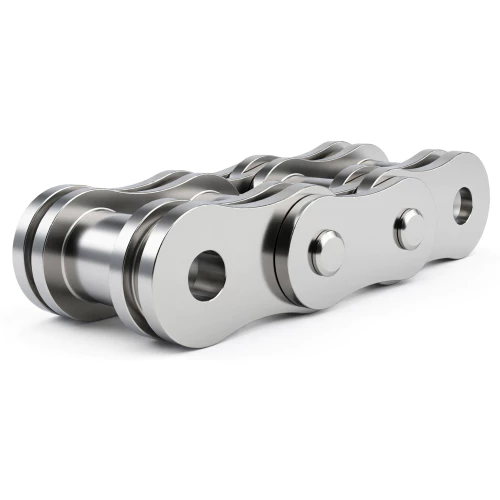
Xích con lăn
Các loại xích con lăn hệ mét ANSI & ISO phù hợp với kho nhông dẫn động của chúng tôi.
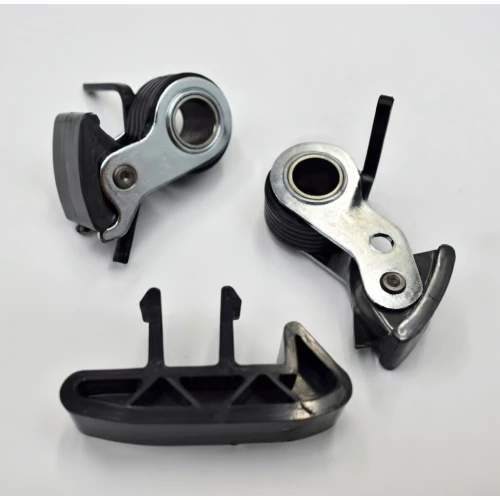
Bộ căng xích
Bộ căng xích tự động và thủ công giúp duy trì độ chùng xích chính xác.
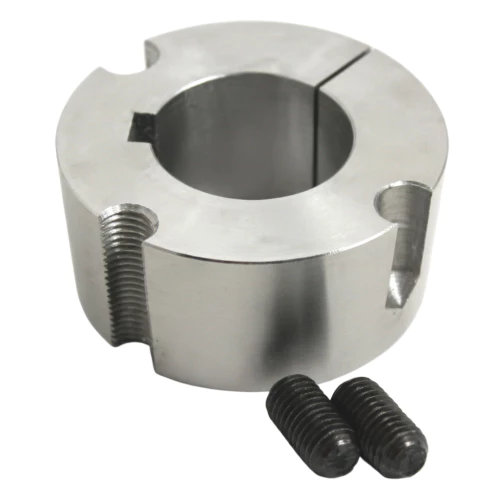
Ống lót Taper-Lock
Các bạc lót chính xác giúp lắp đặt và tháo rời đĩa xích nhanh chóng trên trục có then.
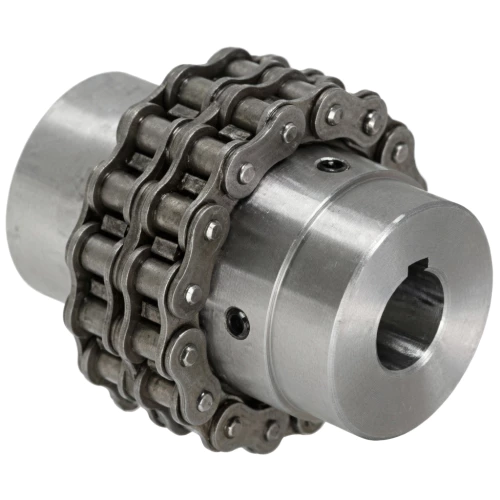
Bánh răng nối
Các bánh răng nối xích dùng cho kết nối trục với trục có dung sai lệch góc.
Chứng nhận & Phạm vi ngành
ISO 9001
Quản lý chất lượng
ANSI B29.1
Tiêu chuẩn kích thước
ISO 606
Tiêu chuẩn chuỗi đo lường
EN 10204
Khả năng truy xuất nguồn gốc vật liệu
Hỗ trợ lựa chọn bánh răng theo yêu cầu
Hãy chia sẻ yêu cầu ứng dụng của bạn với đội ngũ kỹ thuật của chúng tôi. Chúng tôi sẽ cung cấp các khuyến nghị kỹ thuật, dữ liệu kích thước và giá cả cạnh tranh. Không ràng buộc. Không có cuộc gọi tiếp theo trừ khi bạn yêu cầu.
E-mail: [email protected]
Quy trình bảo dưỡng và kiểm tra nhông truyền động
Kiểm tra hình dạng răng bằng mắt thường
Răng nhông dẫn động mới có hình dạng đối xứng với độ dày vật liệu bằng nhau ở cả hai mặt. Khi nhông bị mòn, hình dạng răng trở nên không đối xứng, phát triển thành hình dạng móc hoặc lượn sóng đặc trưng ở mặt chịu tải. Hình dạng móc này cho thấy răng đang bị mài mòn bởi con lăn xích dưới sức căng. Khi hình dạng móc trở nên rõ rệt đến mức con lăn xích không còn khớp với chân răng trong quá trình ăn khớp, hiện tượng trượt xích sẽ xảy ra. Các kỹ sư bảo trì nên so sánh hình dạng răng với mẫu nhông mới trong mỗi lần kiểm tra định kỳ. Nếu hơn 25% vật liệu mặt răng bị mòn ở phía chịu tải, nhông dẫn động nên được lên kế hoạch thay thế trong lần bảo trì tiếp theo. Tiếp tục vận hành nhông bị mòn không chỉ có nguy cơ gây đứt xích dưới tải trọng mà còn làm hỏng xích thay thế sớm hơn do buộc các con lăn phải chạy trên bề mặt răng bị mòn không còn khớp với hình dạng ăn khớp được thiết kế.
Giao thức xác minh căn chỉnh
Sai lệch giữa đĩa xích dẫn động và đĩa xích bị dẫn động là nguyên nhân phổ biến nhất gây mòn sớm xích và đĩa xích. Sai lệch góc (trục không song song) và sai lệch lệch tâm (trục song song nhưng mặt phẳng đĩa xích không trùng nhau) đều tạo ra tải trọng không đều trên toàn bộ chiều rộng của xích, dẫn đến mòn răng cục bộ và mỏi tấm xích. Sử dụng thước thẳng hoặc dụng cụ căn chỉnh bằng laser để kiểm tra xem cả hai mặt đĩa xích có nằm trên cùng một mặt phẳng trong phạm vi 0,5 mm trên 300 mm khoảng cách tâm trục. Đối với đĩa xích bị dẫn động nhiều sợi, dung sai căn chỉnh chặt hơn: 0,25 mm trên 300 mm. Kiểm tra lại sự căn chỉnh sau mỗi lần thay thế đĩa xích, thay vòng bi hoặc di chuyển máy. Trong các ứng dụng khai thác mỏ và công nghiệp nặng trên khắp nước Úc, chuyển động nền móng do rung động có thể làm thay đổi sự căn chỉnh trục theo thời gian, vì vậy việc kiểm tra định kỳ nên được đưa vào lịch bảo trì phòng ngừa thay vì chỉ dựa vào việc kiểm tra căn chỉnh trong quá trình thay thế linh kiện.
Thực hành bôi trơn tốt nhất
Bôi trơn đúng cách giúp giảm ma sát giữa các con lăn xích và mặt răng của đĩa xích dẫn động, tản nhiệt từ vùng tiếp xúc và loại bỏ các hạt mài mòn khỏi chân răng. Đối với các hệ truyền động xích hở hoạt động ở tốc độ dưới 200 mét/phút, việc bôi trơn thủ công bằng chổi hoặc thiết bị nhỏ giọt dầu được áp dụng vào mặt trong của xích tại điểm tiếp xúc với đĩa xích dẫn động là chấp nhận được. Đối với các hệ truyền động tốc độ cao hơn hoặc hệ thống kín, nên sử dụng hệ thống bôi trơn bằng dầu ngâm hoặc dầu tuần hoàn. Tuyệt đối không sử dụng mỡ cho hệ truyền động xích con lăn; mỡ quá nhớt để có thể thấm vào giao diện giữa chốt xích và bạc lót, nơi cần bôi trơn nhất. Chọn độ nhớt của chất bôi trơn dựa trên nhiệt độ hoạt động: ISO VG 30-50 cho nhiệt độ dưới 40 độ C, ISO VG 68-100 cho nhiệt độ từ 40 đến 60 độ C. Trong môi trường chế biến thực phẩm, nơi không thể sử dụng chất bôi trơn thông thường, xích tự bôi trơn kết hợp với đĩa xích dẫn động bằng nylon hoặc POM cung cấp một giải pháp thay thế không cần dầu hiệu quả, đáp ứng các yêu cầu an toàn thực phẩm.
So sánh vật liệu nhông dẫn động cho điều kiện tại Úc
Việc lựa chọn vật liệu phù hợp với môi trường hoạt động là yếu tố quan trọng nhất đối với tuổi thọ của nhông truyền động.
| Vật liệu | Độ bền kéo | Khả năng chống ăn mòn | Nhiệt độ tối đa | Ứng dụng điển hình |
|---|---|---|---|---|
| Thép cacbon 1045 | 570-700 MPa | Thấp | 200 độ C | Công nghiệp nói chung, sản xuất, đóng gói |
| Thép hợp kim 4140 | 655-900 MPa | Thấp | 250 độ C | Khai thác mỏ, băng tải hạng nặng, hệ thống truyền động chịu tải cao. |
| Thép tôi cacbon 8620 | 530-650 MPa | Thấp | 200 độ C | Các ổ đĩa chính xác, chịu mài mòn cao, được tôi cứng bề mặt. |
| Thép không gỉ SS304 | 515-620 MPa | Cao | 300 độ C | Thực phẩm, sữa, đồ uống, dược phẩm |
| Thép không gỉ SS316 | 515-620 MPa | Rất cao | 300 độ C | Hàng hải, hóa chất, nước thải, ven biển |
| Gang đúc | 150-300 MPa | Vừa phải | 250 độ C | Mô-men xoắn cao ở tốc độ thấp, giảm chấn rung động. |
| Nylon / POM | 70-85 MPa | Xuất sắc | 80-100 độ C | Công việc nhẹ nhàng, tiếp xúc với thực phẩm, phòng sạch |
Các tùy chọn xử lý bề mặt và làm cứng
Tôi cứng bằng cảm ứng
Tôi cứng mặt răng đến độ cứng HRC 40-50 trong khi vẫn giữ được độ dẻo của lõi. Đây là phương pháp xử lý tiêu chuẩn cho các bánh răng dẫn động hoạt động trong môi trường mài mòn như khai thác mỏ, chế biến vật liệu xây dựng và xi măng. Kéo dài tuổi thọ răng lên 2-3 lần so với bánh răng không được tôi cứng. Có sẵn trên tất cả các bánh răng dẫn động bằng thép carbon và thép hợp kim trong danh mục của chúng tôi. Độ sâu tôi cứng được kiểm soát để đảm bảo lõi răng vẫn đủ dẻo để hấp thụ tải trọng va đập mà không bị gãy giòn.
Lớp phủ oxit đen
Lớp phủ chuyển đổi hóa học cung cấp khả năng chống ăn mòn nhẹ và cải thiện vẻ ngoài mà không làm thay đổi dung sai kích thước. Thường được áp dụng cho các bánh răng nối bằng thép carbon và các bánh răng dẫn động công nghiệp tiêu chuẩn cho các ứng dụng trong nhà. Kết hợp với một lớp màng dầu để bảo vệ trong quá trình lưu kho và vận chuyển đến người dùng cuối tại Úc.
Mạ kẽm và kẽm-niken
Lớp mạ kẽm hoặc kẽm-niken cung cấp khả năng bảo vệ chống ăn mòn hy sinh cho các bánh răng truyền động bằng thép carbon trong môi trường ngoài trời ẩm ướt hoặc có tính ăn mòn nhẹ. Lớp mạ hợp kim kẽm-niken có khả năng chống ăn mòn muối gấp 5 đến 10 lần so với lớp mạ kẽm tiêu chuẩn, rất phù hợp cho các công trình ven biển của Úc và các thiết bị ngoài trời tiếp xúc với các yếu tố thời tiết quanh năm.
Đánh bóng điện hóa
Xử lý bề mặt điện hóa cho các bánh răng dẫn động bằng thép không gỉ để đạt được độ nhám bề mặt dưới Ra 0,8 micromet. Yêu cầu này cần thiết cho các ứng dụng vệ sinh trong ngành chế biến sữa, thịt và dược phẩm, nơi việc ngăn ngừa màng sinh học là bắt buộc theo quy định an toàn thực phẩm. Bề mặt nhẵn mịn cũng làm giảm ma sát giữa các con lăn xích và kéo dài thời gian bôi trơn xích trong môi trường phòng sạch.